Subscribe
WordCamp Melbourne is ON – Well Done James!
WordPress for Dummies is OUT (just about – Oct. 29) – Well Done Lisa!
Now all we need to do is get the book to the land Down Under…

WordCamp Melbourne is ON – Well Done James!
WordPress for Dummies is OUT (just about – Oct. 29) – Well Done Lisa!
Now all we need to do is get the book to the land Down Under…
Really simple syndication, or RSS, also known as a type of “feed” or “aggregator” is used to list frequently updated content on a Web site, in a specific format.
Originally and mostly used for blogs, RSS is now used by major news sites like Reuters, AP, NYT, WSJ, and Wired to push out their latest news.
The content of the feed can be read by using software called an RSS or Feed reader.
Feed readers display hyperlinks, and include other metadata (information about information) that helps you decide whether they want to read more, follow a link, or move on.
Wikipedia’s list of feed aggregators is fairly up-to-date. Pick one and install it on your PC; many versions are available for free – I use JetBrains Omea.
Once you have subscribed to the news/blogs you want to read, your feed reader will regularly go out to the Web and check for new content, download any new news it finds, and store it on your machine. This is useful if you want to read your news when you are offline.
The original intent of RSS is to make information come to you (via the feed reader) instead of you going out to look for it (via the Web).
More information about RSS:
Scripting News – Dave Winer’s Blog
If you’re interested in subscribing to any of the news feeds listed above, check out:
If you found this post useful, please consider subscribing to my feed
Recently, American Express credit cards wrote to me, explaining I had been pre-selected to obtain one of their cards. All I had to do is go to their website and fill in the form.
Brilliant!
Quick detour:
My family is still new to the United States so our credit rating here is almost non existent. To fix this, we thought we should begin by applying for several cards, paying in time, and build the rating… Amex was on the list.
I spend 15 minutes gathering information, another 20 filling in forms on the site, and hit submit:
“Server down, try again later”
Really, really wanted to smack someone…
How hard is it for the programmers to build in a contingency for this? Not hard. Why don’t they do it?
Because the people that make decisions about changes to the site (marketers and CEO’s), are so busy working out how to get more people to the site, how to optimize their site, how to promote their product; they forget about making the site great for their visitors.
A couple of months ago, Eric Sink wrote about his experience with Citibank and described the dramas of dealing with large corporations in his post, Absurd Customer Relations post. I’m starting to wonder whether quality of service is directly proportional to size of the organization.
In the offline world, small businesses tend to have more expensive product, they have fewer items for customers to choose from, they don’t have the funds to spend on advertising, so what do they do? Focus on really great personalized service!
But – what about experiences in the online world?
The Stanford Guidelines for Web Credibility show that 75% of web users admit to making judgments about the credibility of an organization – based on the design of its web site.
I’m not going back to Amex, Mr. Sink has cancelled his Citibank card, and I’m fairly confident we’re not the only two people in the world to be frustrated with customer service and website design.
So, what then, are business owners – small and big – waiting for?
Do they think it will be easier to fix once they’ve lost all their happy customers – or is it they just don’t know what to do right now?
If you belong in the first group – good luck; if you’re part of the second, start reading.
Web Design for ROI: Lance Loveday and Sandra Niehaus
Lance and Sandra have over 20 years of online experience between them, and their new book Web Design for ROI shows you why it is so important to start treating your web site as a business. Expect to increase 10 – 50% of web sales by switching focus: make your site usable – good for your visitors – instead of worrying about traffic – good (you think) for you.
Business of Software: Eric Sink
Eric Sink led the team that developed the Spyglass browser, (now known as Internet Explorer). His book Business of Software is indispensable if you’re thinking of starting a development firm or joining a startup in a very early phase; the business principles can be applied across all fields.
Eyetracking Web Usability: Jackob Nielsen and Kara Pernice
Eyetracking Web Usability, (available December 2007) demonstrates what can be learned from tracking user’s eye paths – where users go on your site, how they react to design elements – and leaves you with practical and effective information about how best to design your site.
The Art of the Start: Guy Kawasaki
If you listen to only 10% of Guy’s advice then you’ll probably double your success. His book, The Art of the Start will give you the essential steps to launch great products, services, and companies as well as show you how to unleash entrepreneurial thinking at established companies, helping you stay ahead of the pack.
There is an ongoing argument about whether SEO is dead or not. Some even talk about SEO 2.0.
I don’t really care; I just want the Web to be easier to navigate and safer to use, and for this to happen we need to pay attention to Web standards.
If you’re a blogger, does the product you use measure up?
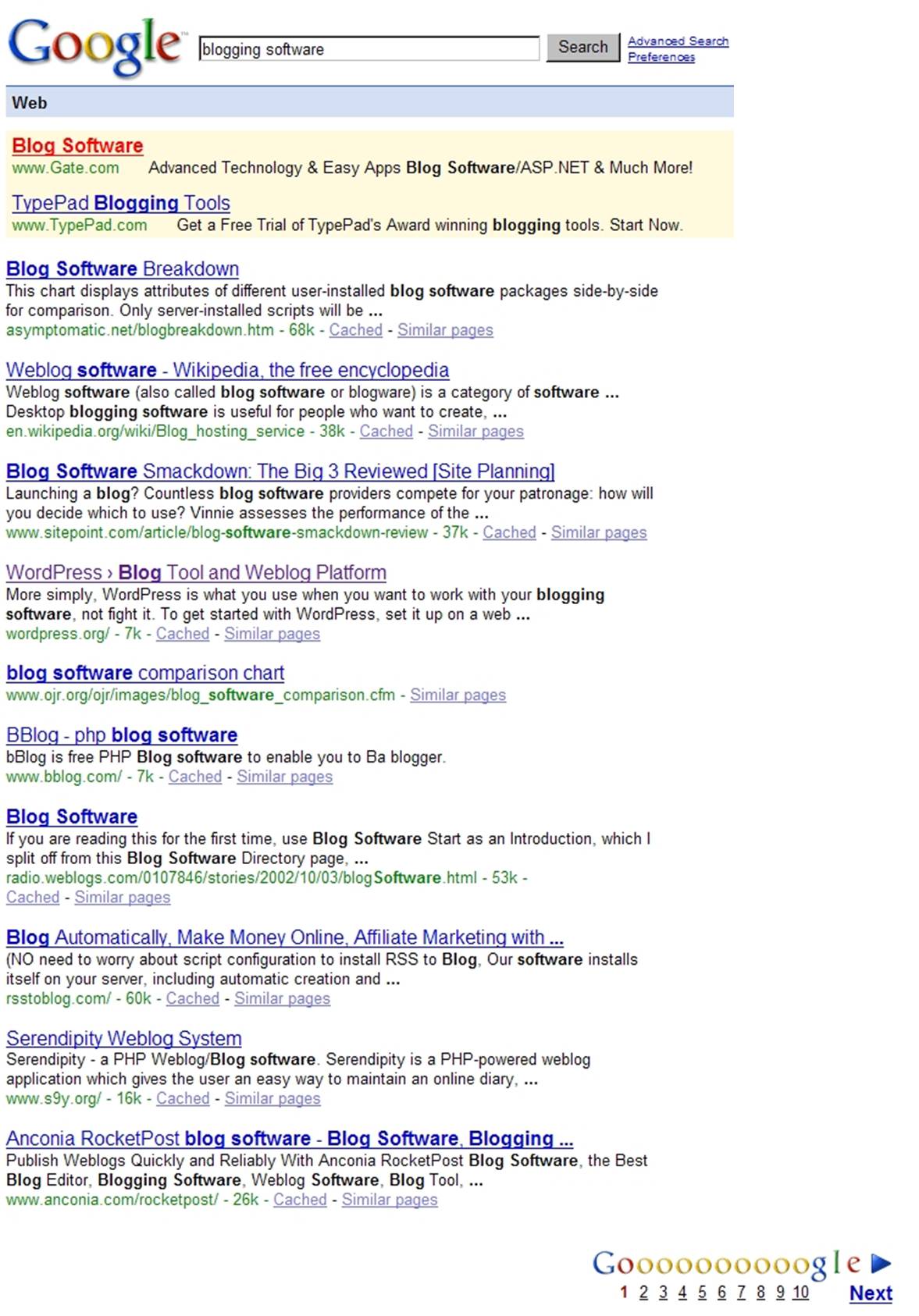
Mine does. Not only does it measure up, but Google likes it too.
Coincidence or not?
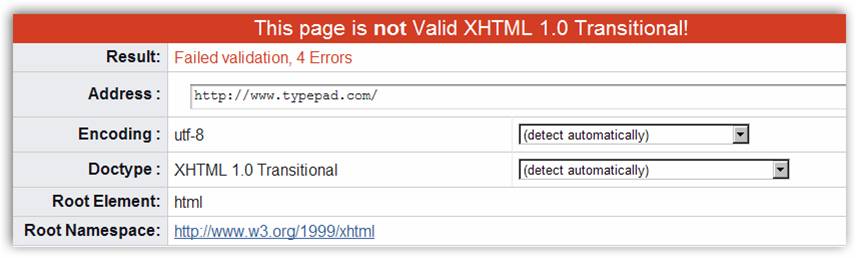
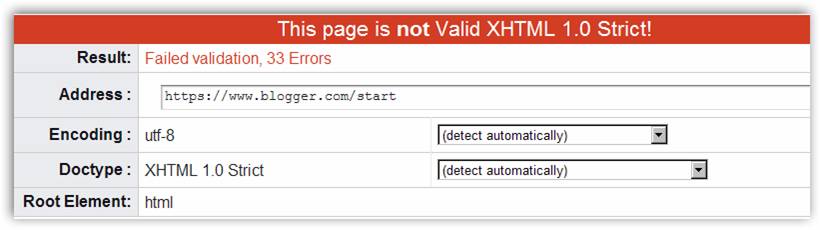
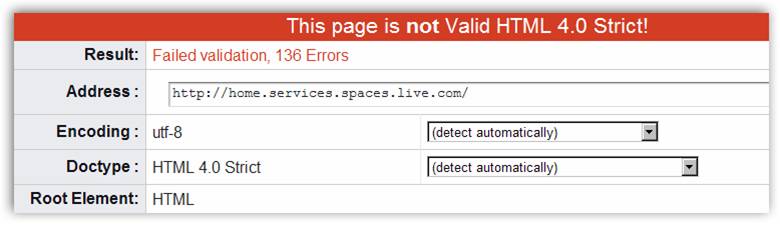
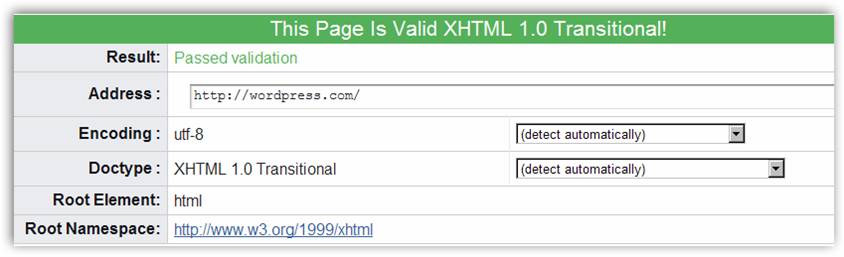
So what’s in search results for blogging software at Google?
James Farmer of Edublogs fame has suggested a WordCamp Melbourne for later this year – fantastic idea.
So let’s help him!!!
If you weren’t here (San Francisco) for WordCamp 07, you can watch videos of sessions on the WordCamp 07 schedule page by clicking on whatever topic takes your fancy.
Australia already has some really cool bloggers – how great would the speakers be?
James would be great…
Duncan of Blog Herald and b5media fame is close – ish…
Darren of ProBlogger fame lives in Melbourne and knows all about blog monetization.
Automattic‘s code bloke Alex is in Melbourne…
Lorelle, sadly is here, but there has GOT to be a way to get her DownUnder…
Dr. Ron should share his WordPress experience (1 min 17 secs) setting up a WordPress blog :-p
Tech Talk should will promote it. 
Check out the WordCamp 07 Photos on Flickr.