
A common question, with a simple answer:

Google can only crawl and index Web sites that the Googlebot can see.

The very next question is: How do I know whether the Googlebot can see my site?

From Google’s Webmaster Guidelines*, pay particular attention to the first technical recommendation:

Use a text browser such as Lynx to examine your site, because most search engine spiders see your site much as Lynx would. If fancy features such as JavaScript, cookies, session IDs, frames, DHTML, or Flash keep you from seeing all of your site in a text browser, then search engine spiders may have trouble crawling your site.

Lynx is licensed as open source, which means that it is free.  You can either download Lynx v2.8.5, or if you don’t want the hassle of downloading and installing it, just use a Lynx viewer; you type in your URL and voila – it shows you what the Googlebot can see.

If you are a little more techie and want Lynx on your machine, Tech Republic have written a cheat sheet that includes 20 of the most useful Lynx keyboard shortcuts.

* Site owners: Don’t be put off by the title “Google Webmaster Guidelines” as they are not just for webmasters, they are for Web site owners too, and they are written in simple English.

If you have a site, whether you are in charge of it or contracting it out, you need to make sure it adheres to the basic guidelines; if it doesn’t, your site can be penalized by Google and the other search engines.  And, reading the guidelines is a lot simpler (and smarter) than trying to get your site back into Google once it has been penalized.

Related Stories:

Know what search engines hate and avoid the Google Death Penalty
What does the Googlebot see when it visits your site?

See your site through different browsers

If you’re an engineer and live in Silicon Valley, Google is inviting you to its G’day Google night on May 8, to learn about all the cool things they are doing in Australia.

Neat huh?  Until you get to the added bonus:

“Australian food and drink — I’m talking Vegemite sangers, yabbies, meat pies, Australian beer, more   Australian beer, and wine”

Wow!  Sangers.  Really?  And lots of beer? Well…no doubt about it, I’m IN!

C’mon Google, give me a break.  Don’t fall into the trap so many other American companies have if you want credibility with the folk down under…it’s lame.

Here’s a clue:

Slang + Australians + Google?*
* Pay particular attention to number 6.

Over the past few days, I’ve received over one dozen e-mails from friends and family, asking me to add my name to a list of people fighting against the miscarriage of justice in the Jamie Bulger case of 1993.

The e-mail is entitled “Remember February 1993”

What blows me away is that within the e-mail it clearly states:

“The Love-Bug virus took less than 72 hours to reach the world, I hope this one does as well”

Do any of the people who sign their name to this know what the Love-Bug virus was, or what it did?

Please, do not send me e-mails to sign or forward on, or send me chain letters where something horrible will happen to me or my family if I choose not to reply.

And if you do, please do not be offended when I delete them without replying.

Yes, the Jamie Bulger case is horrid, yes I feel for his parents (I am a parent – how could I not?).

And this is the point:

The BEST way to spread a virus (interestingly, the method is similar to link baiting) is to make it so emotive, that people are compelled to respond.

Here’s a shocker – viruses, worms, bugs, and all sorts of ugly critters are sent to you more often than not by friends.  Not intentionally, just without consideration or knowledge.

If it is a chain letter, request to sign a petition, an offer of money for a service—like Billy Gates offering $10 for each referral you give him—it is more than likely something that will cause you grief for a long time.

Don’t do it.

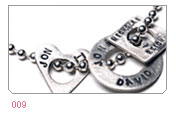
/page/28/the_family_jewels.jpg 

Mother’s day is just about here, so hurry!  The coolest gift for mums, given to me by the coolest teacher for kids, Mrs. McCandless.  AMc, please pay particular attention. :)

The digital revolution has leveled the commercial playing field, and for the first time in history, small business owners and enterprising individuals are able to compete against the big guys and have a fair shot at winning.

Innovations in technology have given us cheaper, yet more efficient software and hardware, Web 2.0, and its user generated content has opened the door for anyone to easily create an inexpensive online presence, and the virtual business model has enabled any enterprising individual to start a business with very little up front capital, and minimal on-going operating costs.

So, costs are down, opportunity is up; it’s a win-win situation, yet increasingly, businesses, in their haste to have the designer inspired, award winning, fully optimized, whiz bang, I-can-do-anything-for-you Website, are forgetting the core reason for their existence: customers.

Read more »

« Previous PageNext Page »