Subscribe

This is BRILLIANT. Jonah and I tried it with a can of Sunkist – and it works!!!
BTW – If you want to know the second law of thermodynamics…

This is BRILLIANT. Jonah and I tried it with a can of Sunkist – and it works!!!
BTW – If you want to know the second law of thermodynamics…
Automattic Kismet (Akismet for short), is open source software that deals with spam in comments and trackbacks on blogs.
The product is brilliant and has caught most of the comment spam on my WordPress blog, but, as is annoyingly typical, the bad guys have worked out the tricks. [Don’t think for one minute that this makes the bad guys smarter than us; it’s just they get to see what we're doing, we don’t get to see what they are doing - until they’ve done it!]
The way the bad guys are getting around Akismet is by writing short, sweet, and generic comments such as “Hi, very good site”
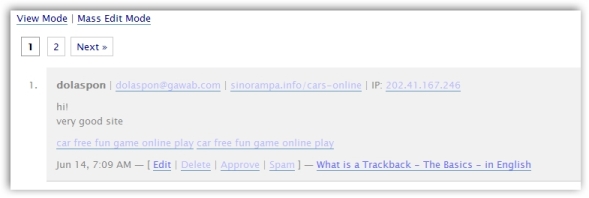
I’m not sure about other blogging software, but within WordPress, there is an option to moderate comments which I have turned on, and it offers me the above information, asking me whether I want to approve it, or treat it as spam before it is posted. At a glance, I can easily see that it is spam and delete it.
So for now, I’m getting help from WordPress in dealing with it, but I have much faith in the worlds number 1 Matt and Akismet; they’ll work out a solution – fast!
More about this on SEO Black Hat.
At the most basic level, AdSense puts advertisements on your Web site; AdWords puts your advertisements on the Web. Together, they make up Google’s advertising programs.
AdSense
AdSense offers Web site owners the opportunity to make money by placing advertisements on their site.
Once you join the AdSense program, Google reaches into its pool of ads (AdWords), and chooses those it considers most relevant to place on your site. Although the choice of ads it serves depends on a variety of factors, relevance is crucial; Google want to make sure the ad that sits on your site fits in with what your site, and its visitors are all about.
If you are part of the AdSense program, Google uses the Mediabot instead of the Googlebot to crawl and analyze the contents of your Web pages, and offer relevant ads. This type of advertising, where ads are chosen by an automated system and based on the contents of a page, is called contextual advertising.
The nice thing about AdSense is that it is not as intrusive (read ugly and jarring to the eye), as other forms of advertising such as banner ads or pop-ups/pop-unders.
You are paid on the number of clicks to an ad from your site; on a per-click basis.
AdWords
AdWords gives you the opportunity to advertise your product/service on the Web, either on Google’s search results pages, or on various Web sites that are part of the AdSense program.
Because the words a user types into Google’s search field are the trigger of related ads appearing on the results page, this type of advertising is also known as keyword advertising.
On Google’s search results pages, ads are labeled “sponsored links” and appear above the organic results, as well as to the right of the organic results. Where your ad is placed on this page is determined by Google.
On Web sites that are part of the AdSense program, your ads will appear in a space the Web site owner designates for Google ads, as well as in search results within that site if the site uses Google’s search tool.
Adwords, like AdSense is paid on a pay-per-click (PPC) basis, but the cost for this type of advertising varies, and is based on a measurement called the Google Quality Score. The higher the Quality Score, the lower the price of the ad.
Amy Konefal, a fellow WebMama team member, and search consultant for Closed Loop Marketing, recently wrote about the problems facing conversion-based marketers when it comes to the factors Google considers when determining Quality Score:
There’s that pesky click-through rate which unfortunately is one of the most weighted elements in the equation. Grrr…
You can read the full story, What’s the True Measure of “Quality” Anyway? at Google Blogoscoped.
For a basic rundown of the AdWords program, watch the five minute What is Google AdWords? video, or visit the Google AdWords Learning Center for free and easy lessons on all things AdWords.
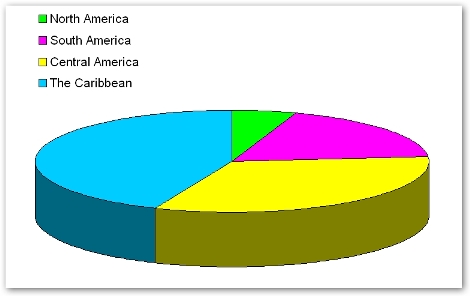
According to Internet World Stats, over the past seven years:
Internet usage in South America has grown by 393.2%
Internet usage in Central America has grown by 708 %
Internet usage in the Caribbean has grown by 939.8%
This growth is reflected in SES offering the second conference that focuses exclusively on Latino markets – SES Latino 2007.
Barbara Coll, (a.k.a. WebMama), (a.k.a. my boss for ten hours every week) will be presenting at Search Engine Strategies Latino 2007, and thinks that people are missing out on this huge Latino market because they are not optimizing their Web sites with this growing economic power in mind.
According to WebMama, the buying power of Latinos in the United States today stands at more than $900 billion and advertisers should be tapping into that.
One challenge for American marketers is do they provide one generic Spanish translated site, or do the provide translations for each Hispanic speaking top level domain? That is – should they worry about having separate, and individual, culturally specific sites, for Brazil, Mexico, Argentina etc.?
If you’re interested, spend a few minutes completing a survey on Barbara’s blog: you never know, the answers may inspire you to think different.
So, just what is the scope of the Latino market?
I don’t really know – all I know is Goog is looking for people to sell ads for their new operations center in Buenos Aires…and I guess they, of all people, know where the money is.

M, J & J
xxxx