Archive for the 'General' Category

Thank you Tad Chef

tadeuszszewczyk.jpg 

Just did my first guest post ever! 

And to do it at SEO 2.0!

Too excited to say anything except for a humungous


Thank You


to Tad

Sphere: Related Content

Origin of SEMPO

While wandering the Web recently, I came across an entry on the SEMPO FAQ page about how SEMPO came to be.  According to the FAQ, SEMPO was officially founded at its inaugural meeting at SES San Jose, August 2003

But then, I want to know what happened unofficially. :)

I came across this gem in an archived WebMama journal (Feb 2003):

“What is SEMPO? Is it a fusion noodle restaurant? The name of a Japanese World War II consul general who helped to save Polish Jewish refugees? A French marine environment simulator? Well, yes, but it’s much more. It’s the first professional organization for search engine marketing professionals - Search Engine Marketing Professional Organization. SEMPO.” 

Barb goes on to talk about the creation and vision of SEMPO - interesting read.

Rob Garner’s take, Search in the City of Dallas, on Search Insider (Feb 2007)

“I also have a vivid recollection of Barbara Coll, CEO of WebMama.com, walking down the hallway of the Adam’s Mark in 2002 with a few other search engine optimizers to discuss the formation of a new association she called “SEMPO,” or the Search Engine Marketing Professionals Organization. So Coll and company hammered out the details for what has become the national group for SEM professionals.”

Sphere: Related Content

Moore’s Law Update from IDF 2007

Intel co-founder, Gordon Moore says “It’s not the end of the road,” when it comes to Moore’s Law.

From the BBC Watch: (approx. 1 min 50 sec)
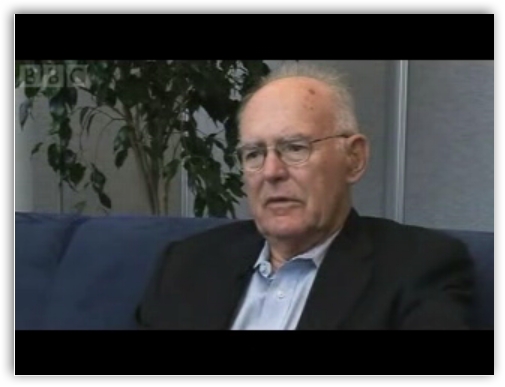
moore.jpg

From the Intel Developers Forum 2007, take a look at the last ten years of silicon chips: (approx 4 min 30 secs):
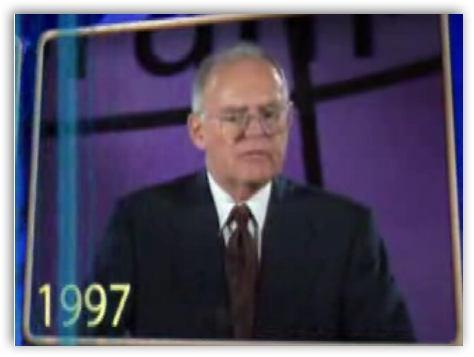
moore1997.jpg

Sphere: Related Content

100 oldest domain names

Came across this interesting post by “some dude from Orlando” which lists the 100 oldest domain names.

Notable omission is microsoft.com, which wasn’t registered until 1991.  It wasn’t until 1995 that Microsoft acknowledged that the Internet was not just a passing fad, and scrapped the soon to be released “Microsoft Network”, its very own version of a private network much like CompuServe/AOL.

google.com was registed in 1997.

Sphere: Related Content

Cool a Warm Drink in 3 Minutes

superchillyourdrinks.jpg

This is BRILLIANT.  Jonah and I tried it with a can of Sunkist  - and it works!!!

BTW - If you want to know the second law of thermodynamics

Sphere: Related Content

Happy Birthday my angel

A little hint

M, J & J
xxxx

Are all Search Engines Brain Damaged?

On November 11, 1990, Peter Deutsch announced the birth of Archie, the worlds first search engine, in a post titled “ An Internet archive server server” on Usenet.  Incidentally, for those who didn’t know, Google acquired Deja.com’s complete Usenet archive (some 500 million messages) in 2001.

In the post, Deutsch describes Archie as

“pretty brain damaged”

He was right, and for me it was the beginning of a love/hate relationship with search that I am certain will continue forever.
 
With each new generation of perfect search, there was a glimmer of hope, and certainly they all brought something new, yet not one was without some degree of brain damage…maybe it’s hereditary.

Today, almost 17 years later I watch in hopeless fascination as Google roll out Universal Search

There are a couple of great articles about Google’s Universal Search at Search Engine Land - Google 2.0: Google Universal Search by Danny Sullivan, and Adapting to Google’s Universal Search by Eric Ward, both written in plain English, and offering far better explanations than I ever could.  My only comment on Universal Search is it’s still a bit buggy.

Sort of like this:

dsgus60.jpg 

I have my fingers crossed that they have worked it out; not so much for me, I worked out years ago that I can pretty much hunt down anything on the Internet — OK, yes, sometimes it takes a few days and maybe search engine brain damage is not just hereditary, but also contagious (I think I’ve caught it) — but for everyone else out there who searches and never finds.  And to quote Walt Mossberg: “ It isn’t your fault”.

Related Stories on the Internet:

Marketing Pilgrim: Google’s Search Gurus Spill Beans on Algorithm

New York Times:   Google Keeps Tweaking its Search Engine June 3, 2007

Sphere: Related Content

D5: Gates and Jobs - Together again, naturally

There are very few people who could have pulled off the greatest rendezvous in the history of technology, so huge hat tip to Walt Mossberg, Kara Swisher, and D: All Things Digital.

For the first time in more than 20 years, Microsoft Chairman Bill Gates, and Apple CEO Steve Jobs sat down for a public chat at D5 - the fifth session of All Things D.

The last time the two pioneers of technology were interviewed together was in 1991 by Fortune’s Brent Schlender.  The last time they appeared together on a stage was when Jobs interviewed Gates on the Macintosh Dating Game, way back in 1983.  (Included on the prologue video below.)

If you haven’t seen the footage of  history’s great rendezvous, it’s time you did.  Allow about an hour 45 to watch from start to end, or read the D5 Gates and Jobs transcript.

The Prologue: Gates and Jobs at D5 7min 2sec

Bill Gates and Steve Jobs at D - Highlight Reel  8min 5sec

Gates and Jobs take questions 18min 44sec

Gates and Jobs on Their Relationship 4min 6sec

Gates and Jobs Look to the Future 10min 56sec

Gates and Jobs on Partnering 8min 16sec

Gates and Jobs on Past Mistakes 15min 10sec

Gates and Jobs Look Back to ‘97 11min

Gates and Jobs on Making a Mark on History 15min 5sec

Sphere: Related Content

If Google, Ask, and Yahoo! can do it – why cant Live?

Go to Google, or Ask, or Yahoo!

Search for something – anything – subject doesn’t matter.

Scroll half way down the results page and click on any link; link doesn’t matter, scrolling does.

Then hit the back arrow in your browser.

What do you see?

Yep, you are back at the results page – but - the page is positioned where you left it.

Now try the same thing in Live – and whaddayaknow?

You are back at the top of your results page.

While this may not be a big deal for many people, those of us who use the Internet daily find it really, um, trying.

Speaking of trying – one more thing,

Researchers tend to split their screens in half; web browser on one side, word processing on the other. 

Most web sites scale well. When they are minimized, all the relevant information is displayed.

Out of these four sites, take a guess at which doesn’t scale well?

Live Blog

Ask Blog

Google Webmasters Blog

Yahoo! blog

Thought for the day: Does everyone miss Billy, or is it just me?

Sphere: Related Content

The Math behind Google’s PageRank

Google’s Page Rank Algoritm in its original form 

If you can understand this, there is a good chance you will want to read the American Mathematical Society’s feature article “ How Google finds your Needle in the Web’s Haystack” The article describes Google’s PageRank algorithm and how it returns pages from the Web’s collection of 25 billion documents. According to David Austin from Grand Valley State University, the trick is to ask the Web itself to rank the importance of pages. I wish you luck!

Sphere: Related Content

Next Page »